


Vibration testing
Low, medium and high frequency vibrations (0.1 to 3,000 Hz)
These test methods are applicable to products which, during transport or operation, may be subject to vibrations of a harmonic nature, broadband vibrations or mechanical shocks.
The purpose of the tests is to define the dynamic behaviour of the specimens, detect any mechanical weakness or degradation with respect to the specified performance.
The main test objects can be components or more complex parts of a car, aircraft, train or ship.
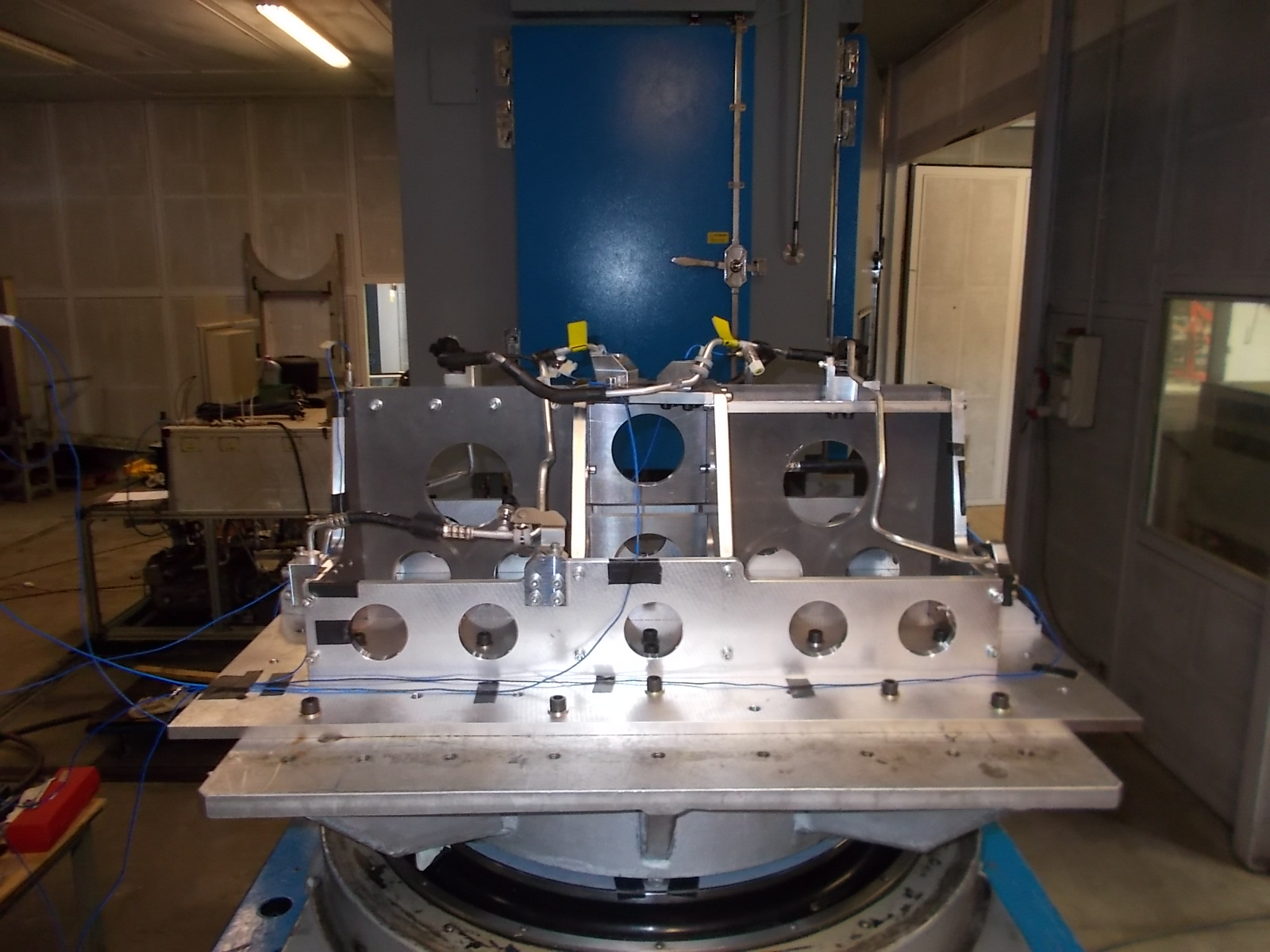
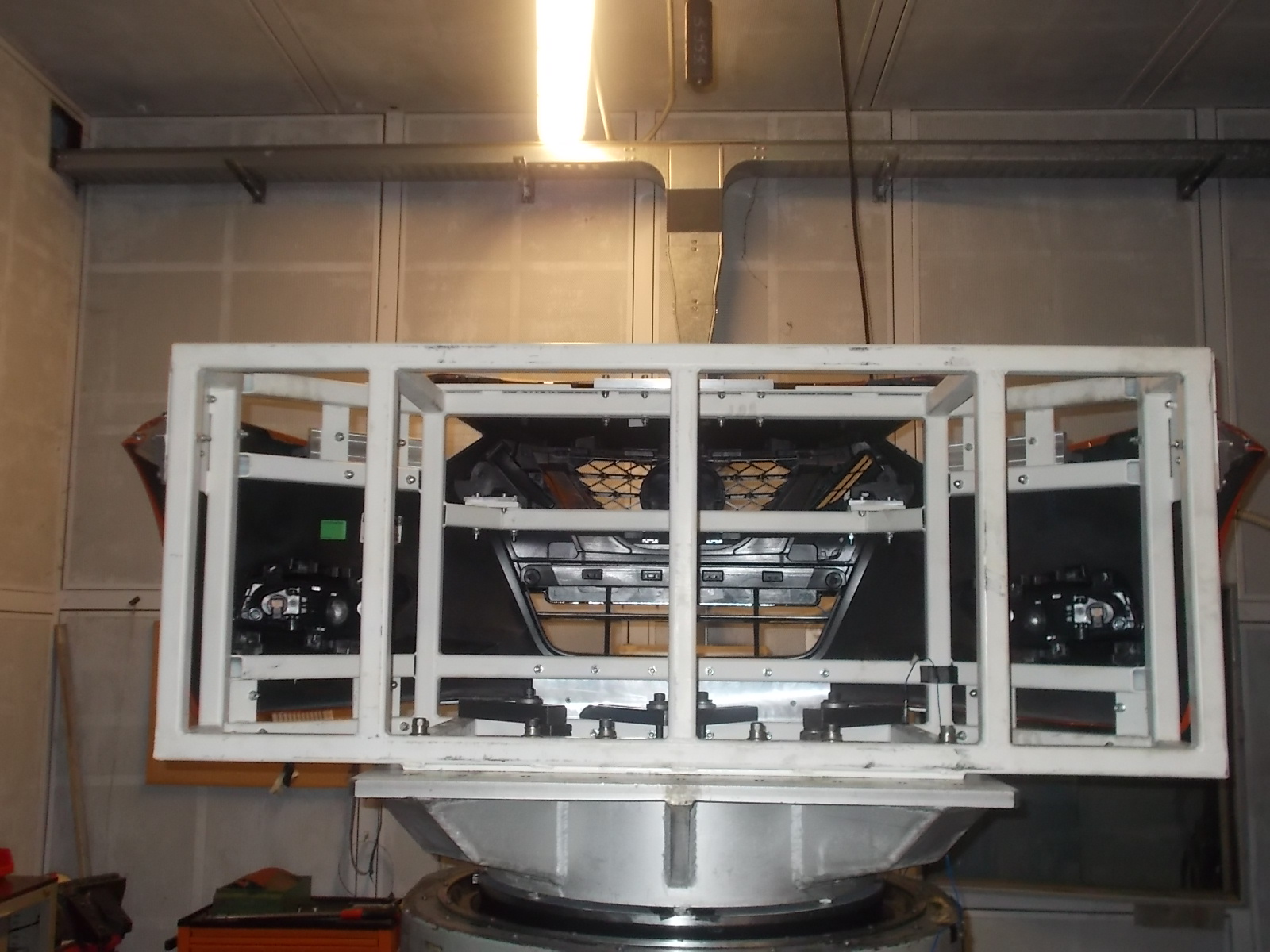
Texa can perform, even on large components, tests according to international standards and customer specifications.
Vibration tests can be
- sinusoidal, for components in real environment close to harmonic sources (motors, rotating machines). In these cases, the sample can be subjected to continuous sinusoidal scanning over a frequency range, a fixed frequency stress or a tracking dwell.
- random, unpredictable vibrations capable of simultaneously exciting frequencies within a certain range (vehicle travelling on the road, aircraft in flight, train running)
- shock (half sine, sawtooth, …), accidental or foreseeable phenomena during the lifetime of an equipment
- sine on sine or random tests, when the test object is in operation subjected to several types of excitation at the same time (e.g. helicopter rotor)
- combined with thermal cycles, with temperature and humidity under control
The vibrational response of the sample can be monitored throughout the test to initially determine the value of the resonance frequencies and observe their evolution over time (measurement of transfer functions).
Tests can be conducted continuously 24 hours a day and customers have the option of taking measurements on the samples during the tests or entrusting Texa technicians with their own diagnostic tools.
Texa is also able to offer an integrated service of fixture design and modification or construction of plant or equipment to customer specification.
Sectors involved in vibration testing: automotive, railway, military, aeronautical, space, nuclear, public telecommunications.
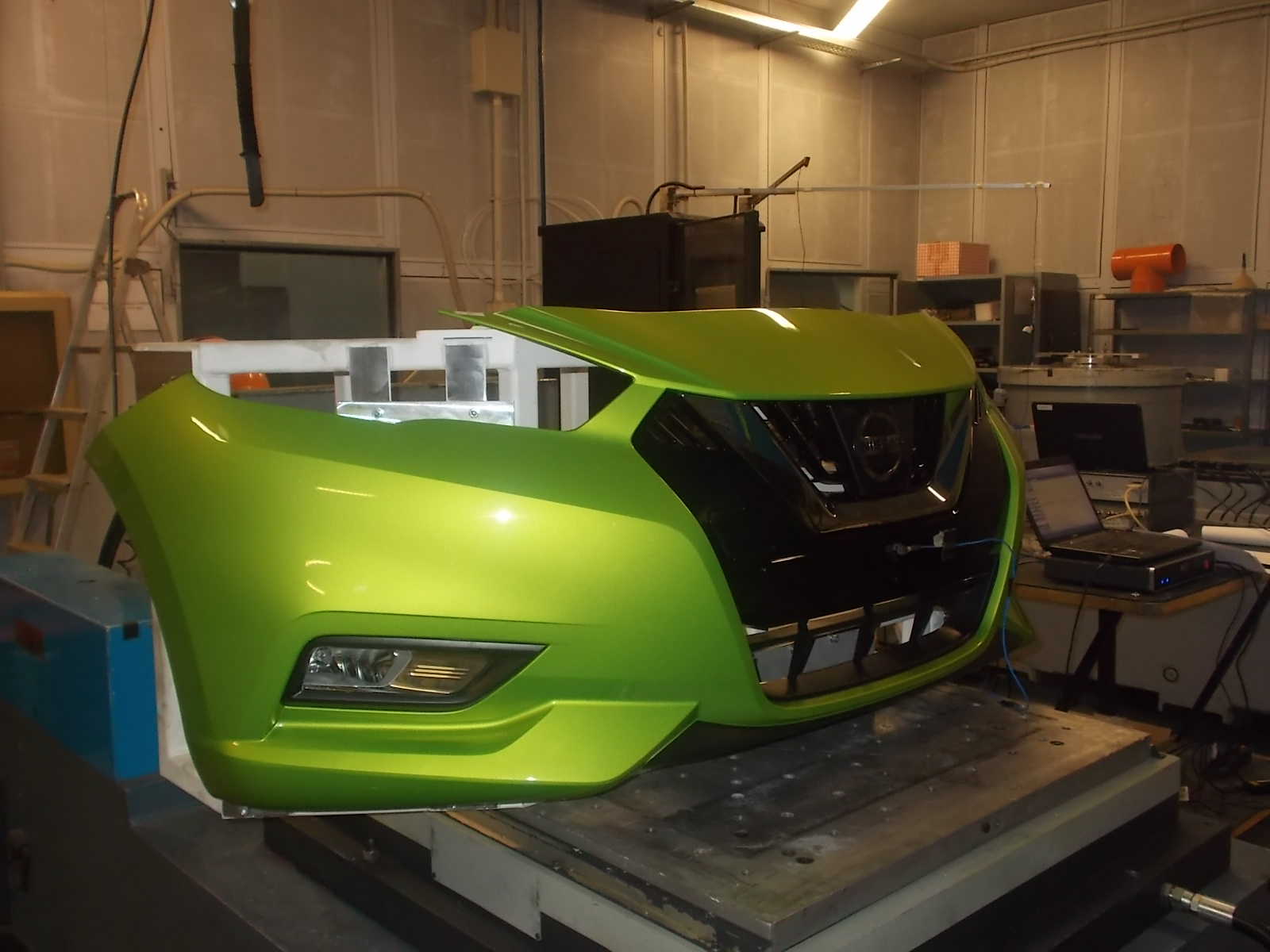

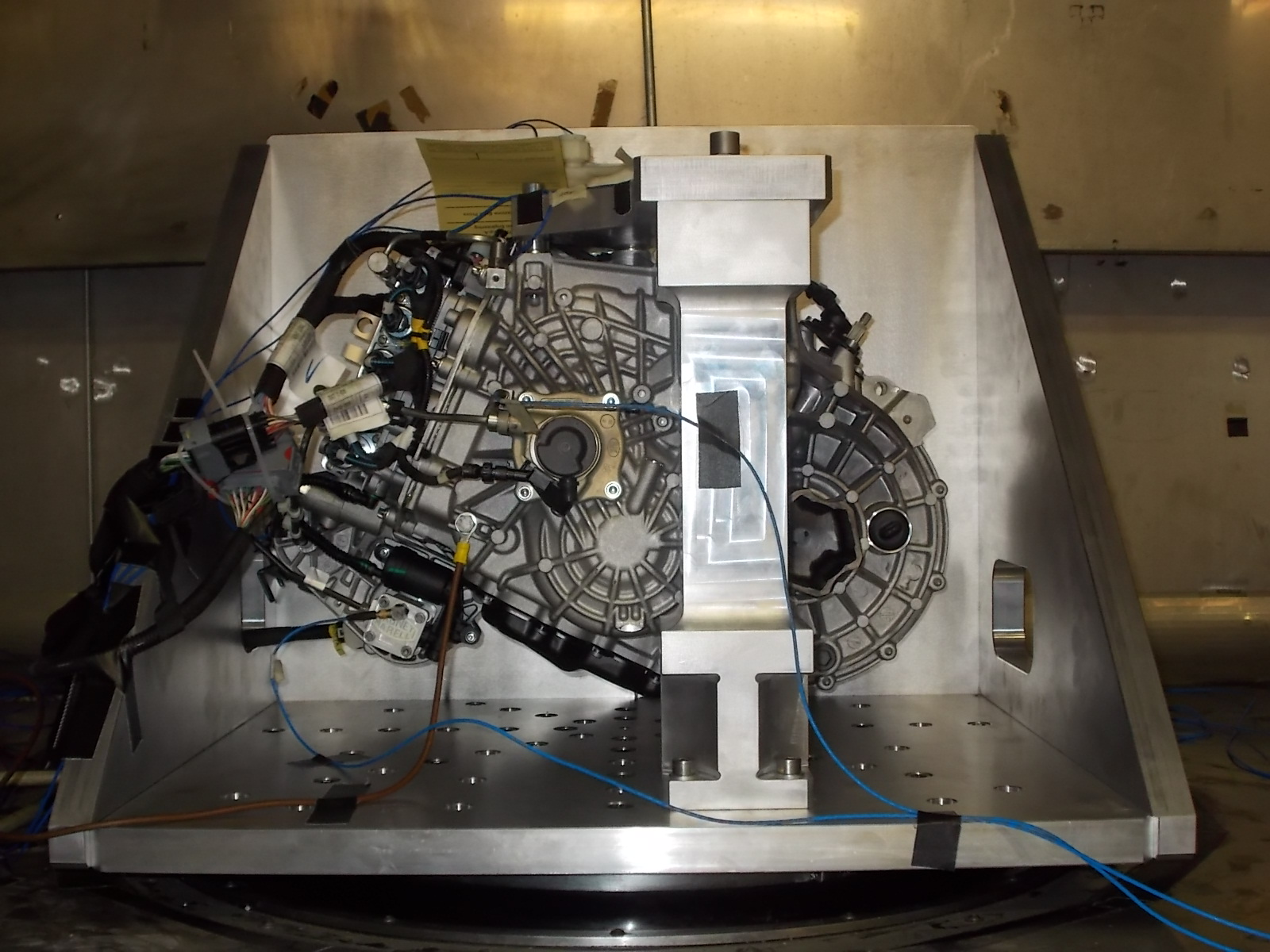
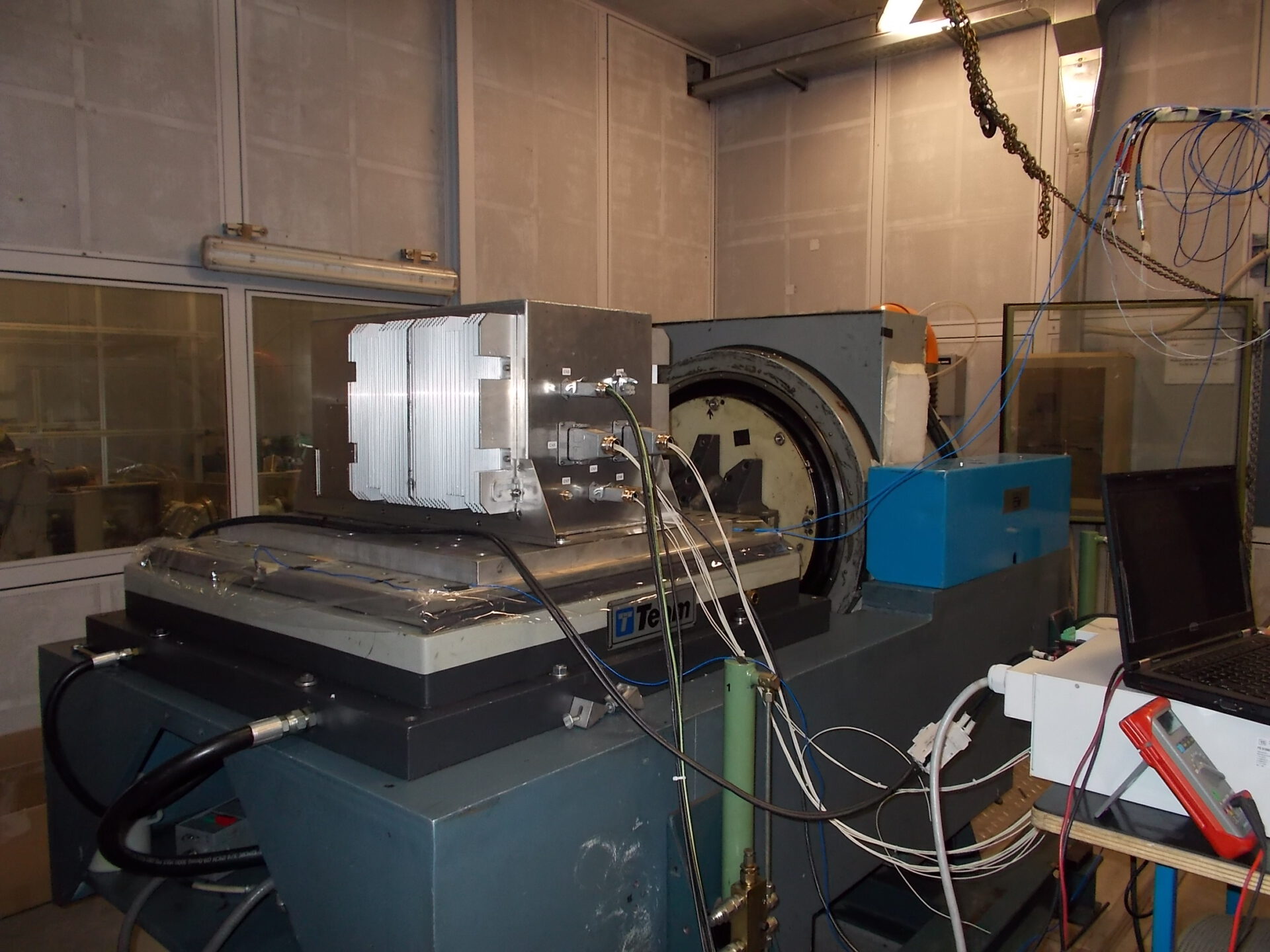

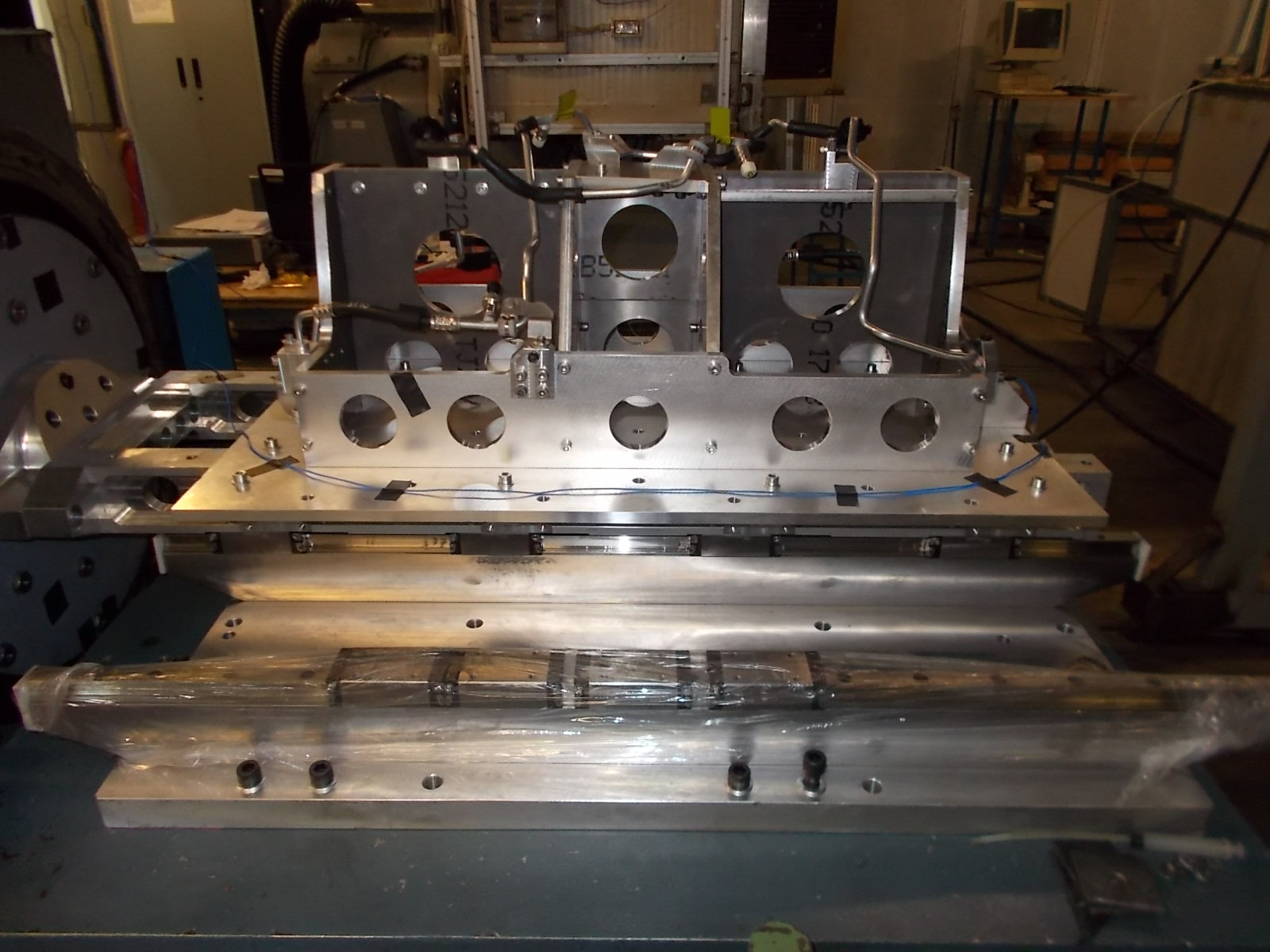



International standard
- IEC 60068-2-6 (sinusoidal vibration)
- IEC 60068-2-27 (shock)
- IEC 60068-2-64 (random vibration)
- IEC 60068-2-53 (combined tests)
Product standards
- IEC 61373(*)
- RTCA DO 160 / ED 14
- MIL STD 810
- ISO 16750
Customer specification
- AIRBUS
- PSA
- RENAULT
- FCA
- CNH
- VOLKSWAGEN
- GM
Main equipment available in TEXA
n.1 electrodynamic shaker TA117S-560 W/HE(**), 25 kN – 1 inch, with hydraulic table 750×750 mm
n.1 electrodynamic shaker SA30-R24C(**), 52 kN – 2 inch, with T-Film Table TEAM series 483.36-4 900×900 mm
n.1 electrodynamic shaker LING B335, 50 kN- 1.5 inch, with hydraulic table 1200×1200 mm
n.1 electrodynamic shaker LDS V830-335(**), 10 kN – 2 inch
n.1 hydraulic windmilling table, force 15 kN, 300 mm p-p, acceleration 20 g, frequency 0.1…50 Hz (very large amplitude low frequency vibrations – aeronautical sector)
(**) Systems combined with climatic cells